
25 September 2026 · 2 min read
How long does it take to learn German?
Learning German to an everyday conversational level (B1) takes about 400–500 hours of study: roughly a year at an hour a day, or 4–6 months in a full-time intensive course.
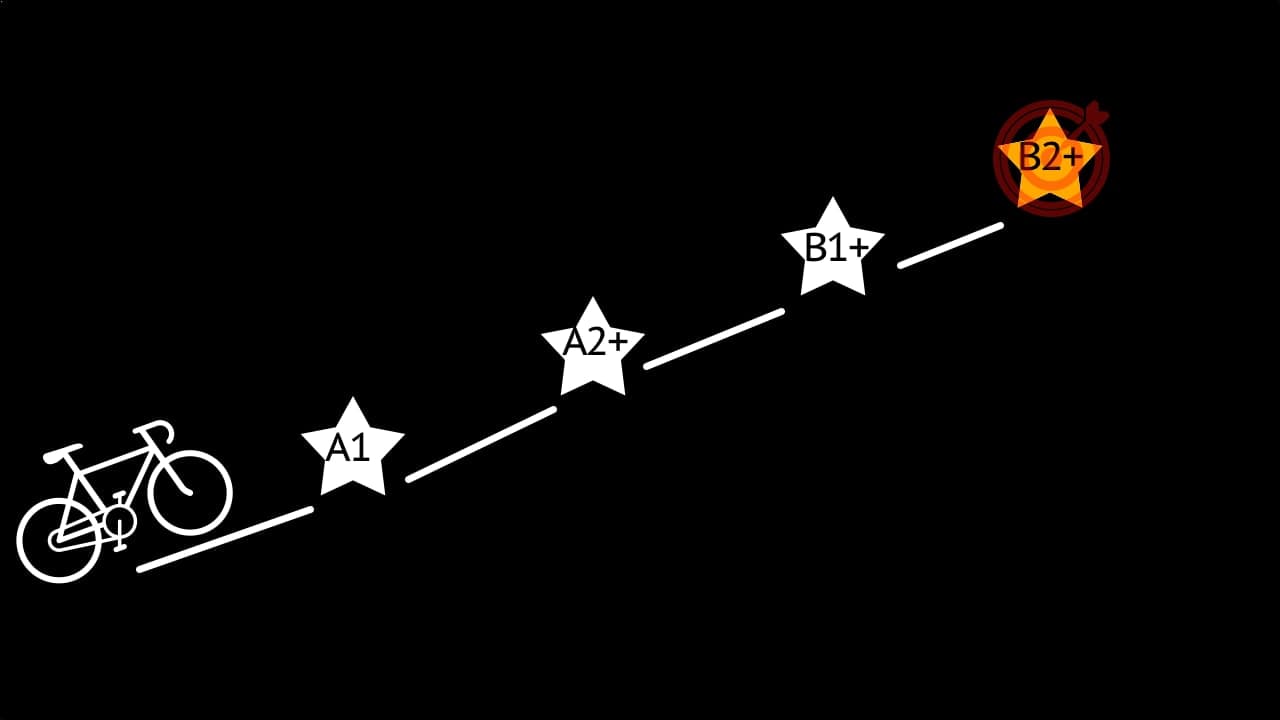
Learning German to a comfortable everyday level, B1 on the European scale, takes about 400–500 hours of study. At an hour a day that is roughly a year. In a full-time intensive course it is 4–6 months. The basics, like introducing yourself, asking for things and understanding simple answers (A1), take around 100 hours, which is 3 months at an hour a day. How fast you get there depends less on talent than on how regularly you practise, and on how much of that time you spend listening and speaking.
How long each level takes
These are rough totals, counted from zero. They are in line with what language schools and Germany's official integration courses work with.
- A1, the basics: about 100 hours. Greetings, numbers, simple questions, shopping.
- A2, simple conversations: about 200 hours. Talking about your day, work, family and plans.
- B1, independent everyday German: about 400–500 hours. The integration course for new residents in Germany uses 600 lessons of 45 minutes to aim for B1. This is also the level most jobs ask for.
- B2, confident German for work: about 600–800 hours. This is the level nurses, customer-support agents and university applicants usually need.
What that means in calendar time
- 30 minutes a day: A1 in about 6 months, A2 in about a year.
- 1 hour a day: A1 in about 3 months, B1 in about a year and a quarter.
- 2 hours a day: B1 in about 7–8 months.
- Full-time course (4 hours a day): B1 in 4–6 months.
Why two people with the same hours end up in different places
An hour in a class where you speak for five minutes isn't the same as an hour where you listen, answer and repeat the whole time. And one three-hour session a week loses to 25 minutes every day, because you forget most of what you don't review within a day or two. Daily practice, said out loud, is how you get the most out of the hours you have.
How to fit the hours in
Most people don't have an extra hour a day, but they do have a commute, a walk, a queue and a lunch break. With 30daysGerman you can use the audio course for that time (63 lessons, about four and a half hours, and you speak in every one) and the interactive course when you can look at your screen: 16 chapters, over 2,000 words and phrases, all with native audio. Pick one or use both.