
25 September 2026 · 2 min read
How many hours does it take to become fluent in German?
Becoming fluent in German takes about 900 class hours for an English speaker, according to the US Foreign Service Institute, plus self-study. Work-level fluency (B2) takes 600–800 hours.
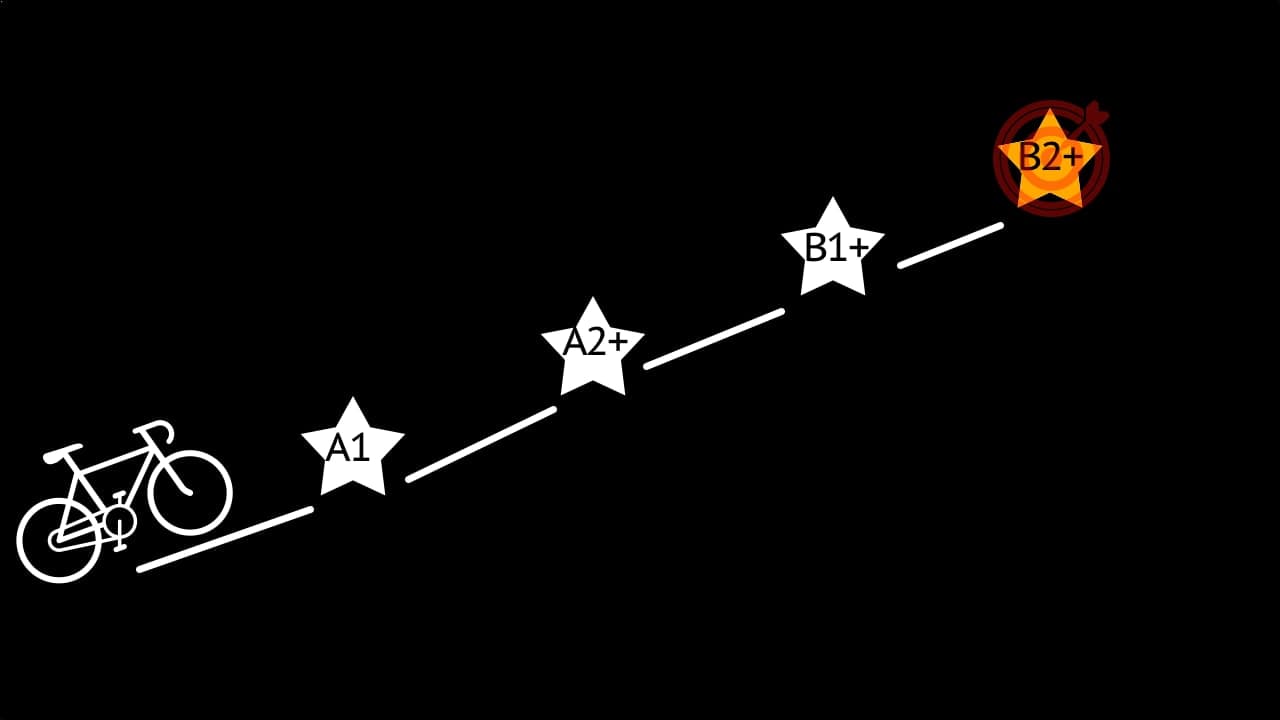
It takes an English speaker about 900 class hours to become fluent in German, according to the US Foreign Service Institute (FSI), which trains American diplomats. That is 36 weeks of full-time lessons, plus homework. If "fluent" means comfortable at work, which is level B2, most learners need 600–800 hours of study in total. At an hour a day that's about two years. At two hours a day it's about a year.
What "fluent" actually means
People mean different things by it, so it helps to use the European levels:
- B1: you handle everyday life on your own. Shops, doctors, landlords, small talk. About 400–500 hours.
- B2: you work in German. You follow meetings, talk on the phone and write proper emails. About 600–800 hours. Most employers mean this when they say "fluent German".
- C1: you understand almost everything and express yourself with nuance. About 800–1,000 hours or more.
Why German takes longer than Spanish
The FSI puts Spanish, French and Italian at 24–30 weeks (600–750 class hours) and German at 36 weeks. German shares a lot of vocabulary with English, but it has three genders, four cases and word order that moves the verb to the end of the sentence. None of it is hard on its own. It just takes a lot of examples before it feels natural.
Hours that count, and hours that don't
The FSI's numbers are for small classes with a lot of speaking. An hour where you mostly listen to other students doesn't count the same. An hour where you hear a phrase, say it out loud, get it right and hear it again a few days later counts for more. That's the cheapest way to lower your total.
How to cut the number down
- Practise every day. Short daily sessions waste less time on forgetting and relearning.
- Speak from the start. Understanding comes faster than speaking, so train the slow one.
- Use dead time. A 30-minute commute each way is five hours a week you already have.
That third point is where the audio course from 30daysGerman fits: 63 speaking lessons, about four and a half hours, for the car, the bus or a walk. When you can look at the screen, the interactive course has 16 chapters and over 2,000 words and phrases with native audio. Pick whichever suits you, or use both. Each is a single payment.