25 September 2026 · 2 min read
Work from home with German: where do you start?
To work from home with German, start by learning German to B1–B2, then apply for German-speaking remote jobs in customer support, sales, tech support or as a virtual assistant.

If you want to work from home with German, start with the language itself: get your German to B1 for chat and email jobs, or B2 for phone jobs. Then apply for German-speaking remote roles in customer support, technical support, sales or virtual assistance. If you already speak English well, German is one of the most useful second languages you can add. Companies serving customers in Germany, Austria and Switzerland need German speakers, and far fewer people can offer German than English. A self-study course such as 30daysGerman's audio and interactive courses gets you through the first levels from your phone.
Which work-from-home jobs ask for German
- Customer support (chat and email): often B1–B2. Written German, polite short answers.
- Customer support (phone) and technical support: usually B2. You need to understand people who talk fast.
- Sales and account management: B2 and up.
- Virtual assistant for German-speaking small businesses: B1–B2, depending on the tasks.
- Translation and content work: C1 or higher. This is a later goal, not a starting point.
A reality check before you start
Some German-speaking remote jobs require you to live in the EU, for tax or data-protection reasons. Read the ad carefully. The roles open to you are usually either "remote from anywhere" jobs, or jobs with outsourcing companies that run German-language teams in your own country. Companies in India, the Philippines, Egypt and Morocco, among others, do exactly that, and often pay German speakers more than English-only staff in the same office.
And if you'd like to move to Germany later, German helps there too. The Opportunity Card (Chancenkarte) asks for at least A1 German or B2 English, and German earns you extra points.
Where to start, step by step
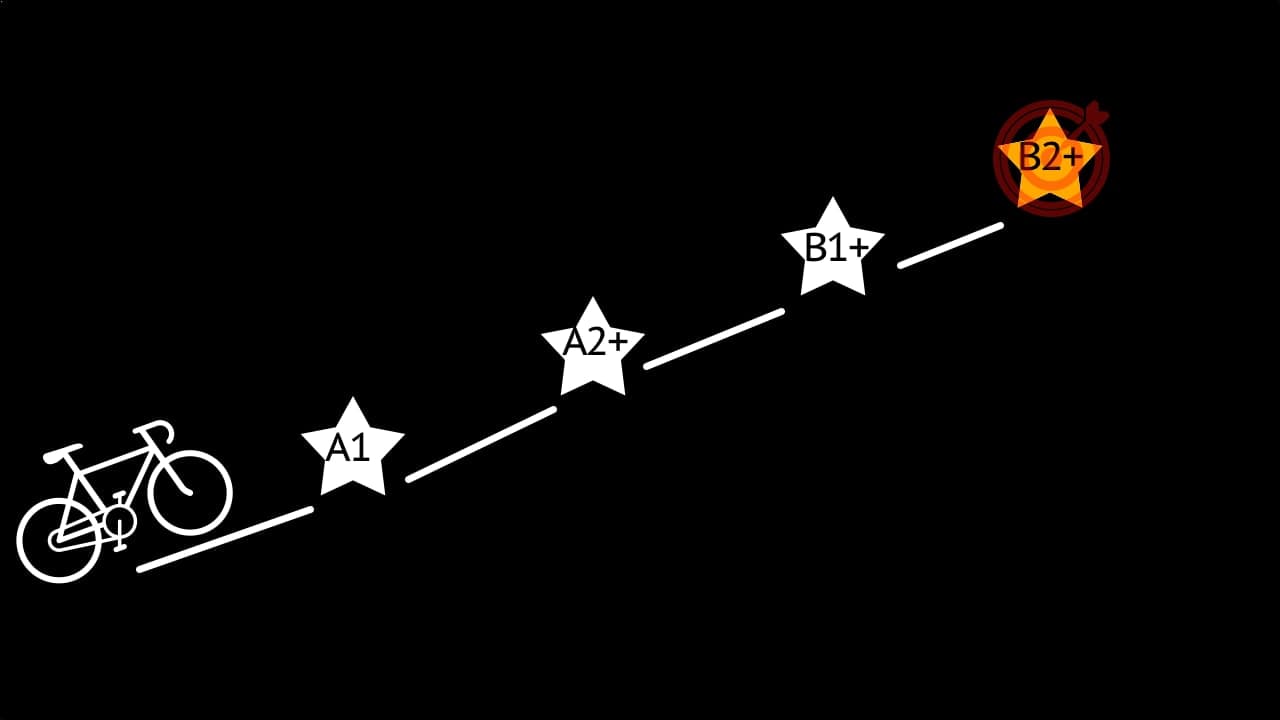
- Months 1–4: reach A1–A2. Everyday phrases, numbers, times, polite requests. Practise every day.
- Months 5–12: reach B1. Past tense, writing short messages, understanding someone who speaks at normal speed.
- Get a certificate: Goethe-Institut or telc. Employers often ask for one, and many countries have exam centres.
- Update your CV and LinkedIn: write "German B1" (or your level) in the headline, and search for "German speaking" together with "remote" or "work from home".
- Keep going to B2: that's where the better-paid phone and technical roles begin.
Learning German around a job you already have
Most people doing this already work, so the hours have to fit in around real life. With 30daysGerman you can use the audio course for the commute or the chores (63 speaking lessons, about four and a half hours) and the interactive course when you can look at your phone: 16 chapters with over 2,000 words and phrases. Choose one or both. Each is a single payment, with no subscription.